


Growth Of The Indian Veterinary Pharmaceutical Industry
Published On: January 22, 2026 | Last Updated On: February 25, 2026
If you are wondering, how the Indian veterinary pharmaceutical industry becomes one of the fastest growing segments in the animal healthcare sector? From the past few years the India see animal sector as niche and the demand of Veterinary medicines, Vaccines, Animal health solutions has seen a signficant surge, and there are many behind this surge some of them are Expanding livestock farming, Increasing pet ownership, Improved animal care pratices, Growing export opportunities
This growth doesn’t only reflect India’s economic expansion, it is also a big shift toward better animal welfare.
Market Overview: Size and Projections
From the recent market analyses, many professionals predict the rapid expansion of the veterinary pharmaceutical landscape in India. Let’s talk about in the term of some data we are keep it simple, the veterinary pharmaceutical market in India was valued at USD 1.15 Billion in 2024 and is expected to reach over USD 2.2 Billion by 2033 and that is 7.5% annual growth rate (CAGR)
As we know the growth is great but it is also important to know its key drivers.
- India’s large livestock population
- Growing pet care market
- Domestic production of vaccines and medicines
- Government Initiatives and regulatory support
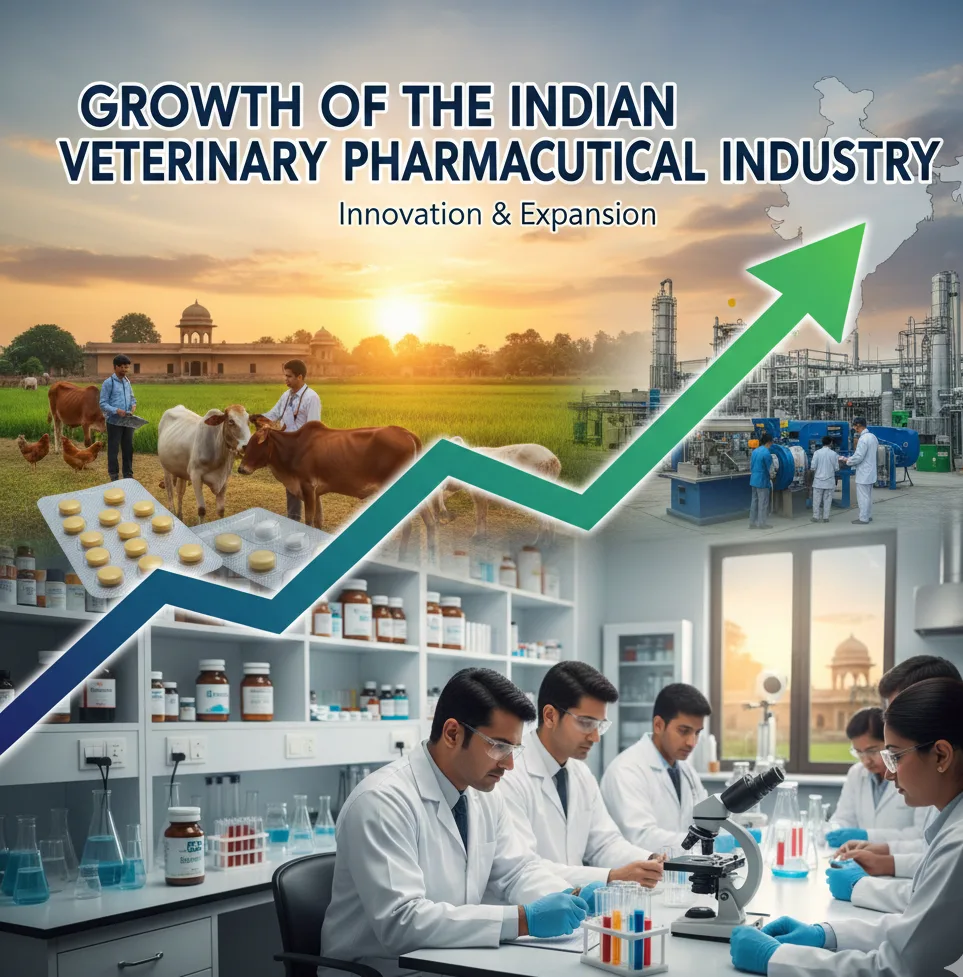
Key Drivers of Industry Growth of the Indian Veterinary Pharmaceutical Industry
The growth is good, but let’s dive into the key driver of this industry growth. So that you have more confidence in growth that it’s a real thing not any bluff. So lets get confidence,
Expansion of Liverstock Farming
Why does it come first? Because it is central India’s rural economy. Livestock includes cattle, buffaloes, sheep, goats, and poultry which directly impact quality of survivals. Healthier animals mean Higher productivity, Lower disease incidence, Better quality meat, milk, and eggs.
And because of this, farmers of India now increasingly investing in veterinary medicines, vaccines, and preventive care which increase the trust on medical industry.
Rising Pet Ownership
I don’t know how many of you are pet lovers. But from the past few years urban India is seeing a surge in pet adoption. In fact pets are now treated as family members, which results creating demand for ;
- Anti-parasitic medicines
- Vaccines
- Nutritional supplements
- Chronic care medications
And this love toward pets has created a premium segment in the veterinary pharmaceutical market.
Technological Advancements
Technology itself a fastest industry and Technology also helping in improving animal healthcare through,
Ai based diagnostics
Digital health tools
Point of care testing
The innovation in technology is helping in rural areas with limited veterinary services.
Government Support
In the growth of veterinary pharmaceutcal industries the Government also plays an important role and Programs likes National Animal Disease Control Programme (NADCP) which are promoted by government are helping to in the growth of veterinary pharmaceutical industry,
- Improve vaccination coverage
- Strengthen disease prevention
- Enhance livestock health
Regulatory reforms also make it easier for companies to launch new products.
Export Opportunities
Because of India’s leverage, India is backing itself. India is increasingly exporting Veterinary drugs, Vaccines, Formulations which helps boost their reputation and revenue as well.
India is now doing international collaboration and expansion which is boosting global competitiveness and revenue which is excellent.
Major Product Segments
The Indian veterinary pharmaceutical industry includes,
- Therapeutics and Drugs which are used as antibiotics, anti inflammatory drugs, anti-parasitics.
- Vaccines for preventive care for livestock and pets
- Medicated Feed additives & Supplements which helps to enhance growth and immunity.
- Diagnostics & Point of care Solution used for early disease detection to improve treatment outcomes.
Challenges in the Industry
It’s true that the Indian veterinary pharmaceutical industry has seen strong growth from a few years ago but despite its strong growth there are challenges as well and these challenges are limited access to veterinary care in rural areas, regulatory and logistical hurdles, and antimicrobial resistance. It is important to know these because knowing it will help you for long term sustainability.
Future Outlook
Now we know the data, advantages, and challenges after reading all the future of the Indian veterinary pharmaceutical industry appears highly promising with the expectation of 7.5% annual growth rate. And now we know that the reason that growth will be driven in the future by,
- Technology and innovation
- Government supports
- Expanding livestock production
- Rising demand for pet care
- Export potential
FAQs about Growth of the Indian Veterinary Pharmaceutical Industry
Q – What factors are driving the growth of the Indian veterinary pharmaceutical industry?
A – Factors that driving growth is:
- Livestock farming
- Rising pet ownership
- Technological innovation
- Government programs
- Export opportunities
Q – How large is the Indian veterinary pharmaceutical market?
A – From the latest data the veterinary pharmacutical market in India was valued at USD 1.15 Billion in 2024 and is expected to reach over USD 2.2 Billion by 2033 and that is 7.5% annual growth rate (CAGR).
Q – What are the main product segments?
A – There are 4 main product segments,
- Therapeutics and Drugs which are used as antibiotics, anti inflammatory drugs, anti-parasitics.
- Vaccines for preventive care for livestock and pets
- Medicated Feed additives & Supplements which helps to enhance growth and immunity.
- Diagnostics & Point of care Solution used for early disease detection to improve treatment outcomes.
Q – Why is vaccine production important?
A – The production of Vaccines is important because it prevent animal diseases, reduce economic losses, support food security, and lower dependency on drugs.
Q – What is the future of the industry?
A – The future growth will be driven by,
- Technology and innovation
- Government supports
- Expanding livestock production
- Rising demand for pet care
- Export potential